Choosing a rain jacket
Waterproof ratings, breathability and the finish that wears off, so you can tell a real shell from a shower-proof one.
By FindGuides Editors · October 9, 2026 · 7 min read
A rain jacket has to do two things that fight each other: stop rain getting in, and let sweat get out. A bin bag does the first perfectly and the second not at all, which is why you arrive soaked from the inside. Every waterproof jacket is an attempt to balance those two demands, and the numbers on the label describe where it landed. Once you can read them, the gap between a true mountain shell and a shower-proof city jacket becomes obvious, and so does which one you actually need.
Waterproof versus water resistant
These terms are not interchangeable, and the label wording is a clue. Water resistant means the fabric shrugs off light rain for a while before it wets through, which is fine for a drizzle between shops. Waterproof, properly used, means the fabric blocks sustained rain and the seams are sealed so water cannot sneak through the stitching. The quick test is the seams: a true waterproof jacket has taped or welded seams on the inside, because every needle hole is a leak until it is sealed. No taped seams usually means no serious waterproofing, whatever the front of the jacket claims.
The hydrostatic head number
Waterproofness is measured by hydrostatic head, which is how tall a column of water the fabric can hold back before it leaks, quoted in millimetres. A higher number means more resistance to pressure, and pressure matters because a pack strap, a sitting body or a strong wind presses water against the fabric far harder than still rain does.
| Hydrostatic head | Roughly handles | Honest use |
|---|---|---|
| Below 5,000 mm | Light, short showers | Water resistant, not a shell |
| 5,000 to 10,000 mm | Moderate rain, light pack use | Everyday commuting and short walks |
| 10,000 to 20,000 mm | Sustained rain with a pack | General hillwalking and hiking |
| 20,000 mm and above | Hard, prolonged storms | Serious mountain and multi-day use |
Breathability and how it is rated
Breathability is how well the jacket lets your sweat vapour escape, and it is what stops you from poaching on a climb. It is quoted in a few different ways, most commonly as a moisture vapour transmission rate in grams per square metre over a day, where a higher number moves more sweat. The catch is that no fabric breathes fast enough to clear heavy exertion, and breathability drops when the outside is already humid or the face fabric is wetted out. That is why pit zips, underarm vents you can open on the climb, often do more for real comfort than a slightly higher breathability figure. Treat the number as a guide and value adjustable venting at least as much.
The DWR finish, and why it fails
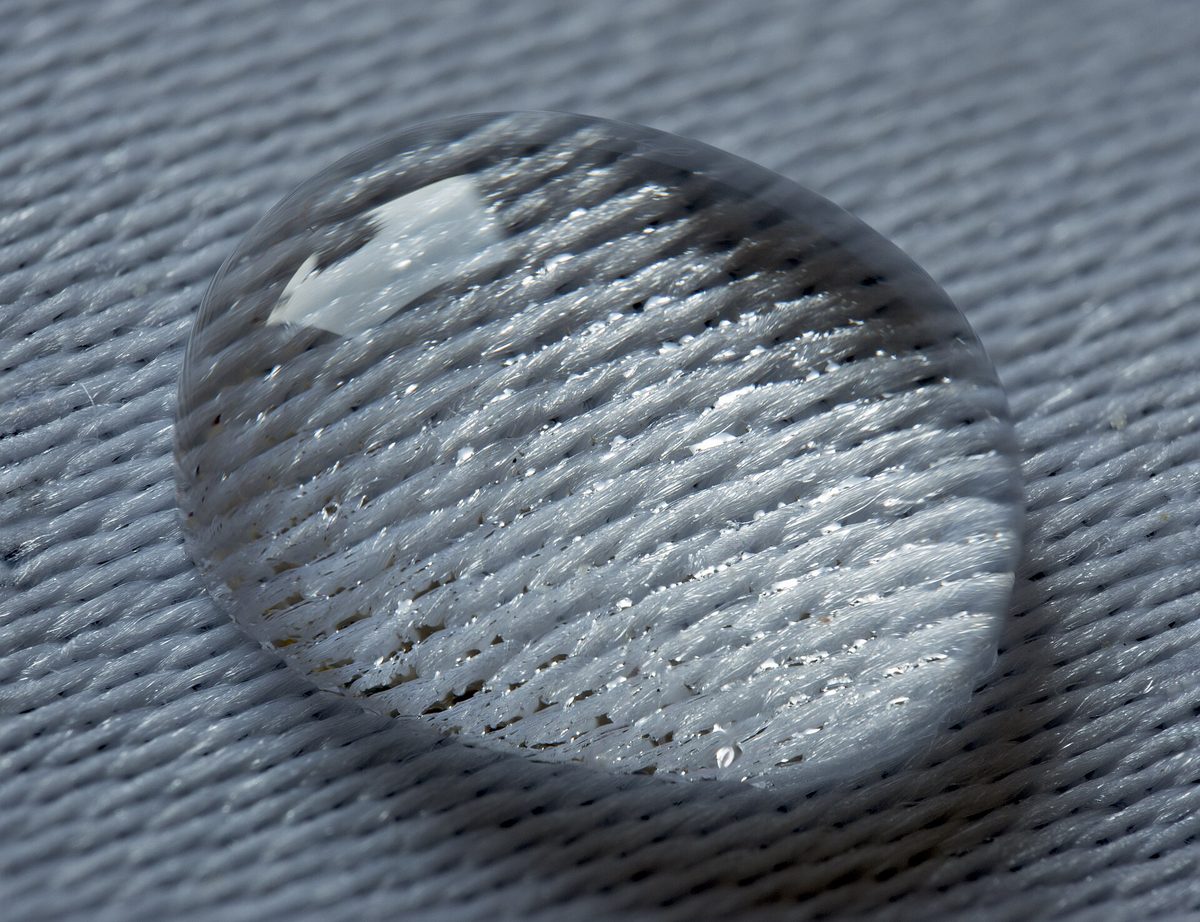
Most shells carry a durable water repellent finish, a thin coating on the outer fabric that makes rain bead up and roll off. When it is working, water forms tight beads; when it fails, the outer fabric soaks up water and wets out, which makes the jacket feel like it is leaking even when the membrane underneath is still blocking water. A wetted-out face fabric also kills breathability, so you feel clammy. The DWR wears off with use, dirt and washing, and it is renewable. Washing the jacket in a technical cleaner and reactivating the finish with gentle heat from a tumble dryer or iron, following the care label, brings the beading back. A shell is not a buy-once item; it needs this upkeep to keep performing.
Membranes, layers and fit
Underneath the face fabric, waterproof-breathable jackets use either a membrane or a coating, built into two-layer, two-and-a-half-layer or three-layer constructions. More layers generally mean more durability and a higher price, with three-layer shells aimed at hard use and two-and-a-half-layer ones kept light and packable. Beyond the construction, fit and features decide whether you enjoy wearing it: a hood that adjusts and turns with your head, a hem and cuffs you can cinch down, and enough room to layer a fleece underneath without the sleeves riding up.
A short buying checklist
- Check for taped or welded seams inside; no tape means no real waterproofing.
- Match the hydrostatic head to your use, aiming higher if you carry a pack.
- Favour pit zips and an adjustable hood over a marginally better breathability number.
- Plan to wash and reproof the DWR rather than expecting it to last forever.
- Try it on over your usual layers and move your arms overhead before buying.
Buy the jacket for the worst weather you will genuinely be out in, not the worst that exists. A commuter does not need a 28,000 millimetre mountain shell, and a hillwalker in a wet climate should not trust a shower-proof city jacket. Match the numbers to your use, keep the finish renewed, and a good shell will keep you dry for years.
Photo credits. Photo: Robert Alexander Wilson / Wikimedia Commons, CC0. Photo: Petar Milošević / Wikimedia Commons, CC BY-SA 4.0. Photo: Marek Ślusarczyk / Wikimedia Commons, CC BY 3.0.